


Today's Protest - Photos
Today's Protest - Photos


Joined:
X days ago
# Posts:
X,XXX
Contributor Points:
X
 FASTLANE:
This "Fastlane" discussion may cover sensitive, inflammatory, or controversial topics.
See Fastlane guidelines »
Replies:


 luv2eatsushi

I want to learn why people are being trained to break laws in order to interfere with public safety measures (enforcing Congressional laws)
 Spork :
In a nutshell, I don't think the vast majority of the American public has an issue with enforcing immigration law. I think the problem people have with it is the methods by which enforcement of the law is being carried out. There's a way to do everything. Many people feel this is not the way.

 rocket :
I think the problem people have with it is the methods by which enforcement of the law is being carried out. There's a way to do everything. Many people feel this is not the way.
This hasn't changed under the Trump....It's the same as it was under Biden and the rest....It's just that the SHADY MEDIA puts their "cameras/microscope" on it now that it's under the Trump....You're being "played"....
On a routine basis, did you see officers and agents tasked with enforcing immigration law wearing mask and using the tactics we're seeing now, under previous Administrations?
Sophos2 Well that's a lot of text that invites quite a bit of dialogue. My response addressing each conversation starter doesn't fit in a single text box. I have no idea what each text box's character count is, but this is part 1:
Avoidance of Danger: DHS policy mandates that LEOs should always avoid intentionally and unreasonably placing themselves in positions-such as standing directly in front of a vehicle-where they would have no alternative but to use deadly force.
Yes, DHS (administrative) policy does direct that officers SHOULD AVOID (not MUST AVOID and not SHALL NOT AVOID) placing themselves directly in front of or behind a vehicle, or in positions where they have no alternative but to use deadly force. Officers are trained to not INTENTIONALLY block or approach vehicles from the front.
Requirement to Move: When a vehicle poses an imminent threat, officers are expected to pursue all "objectively reasonable defensive options," which explicitly include moving out of the path of the vehicle before resorting to lethal force.
This just means if they can reasonably step out of harm's way rather than shoot, they SHOULD (not MUST) do so.
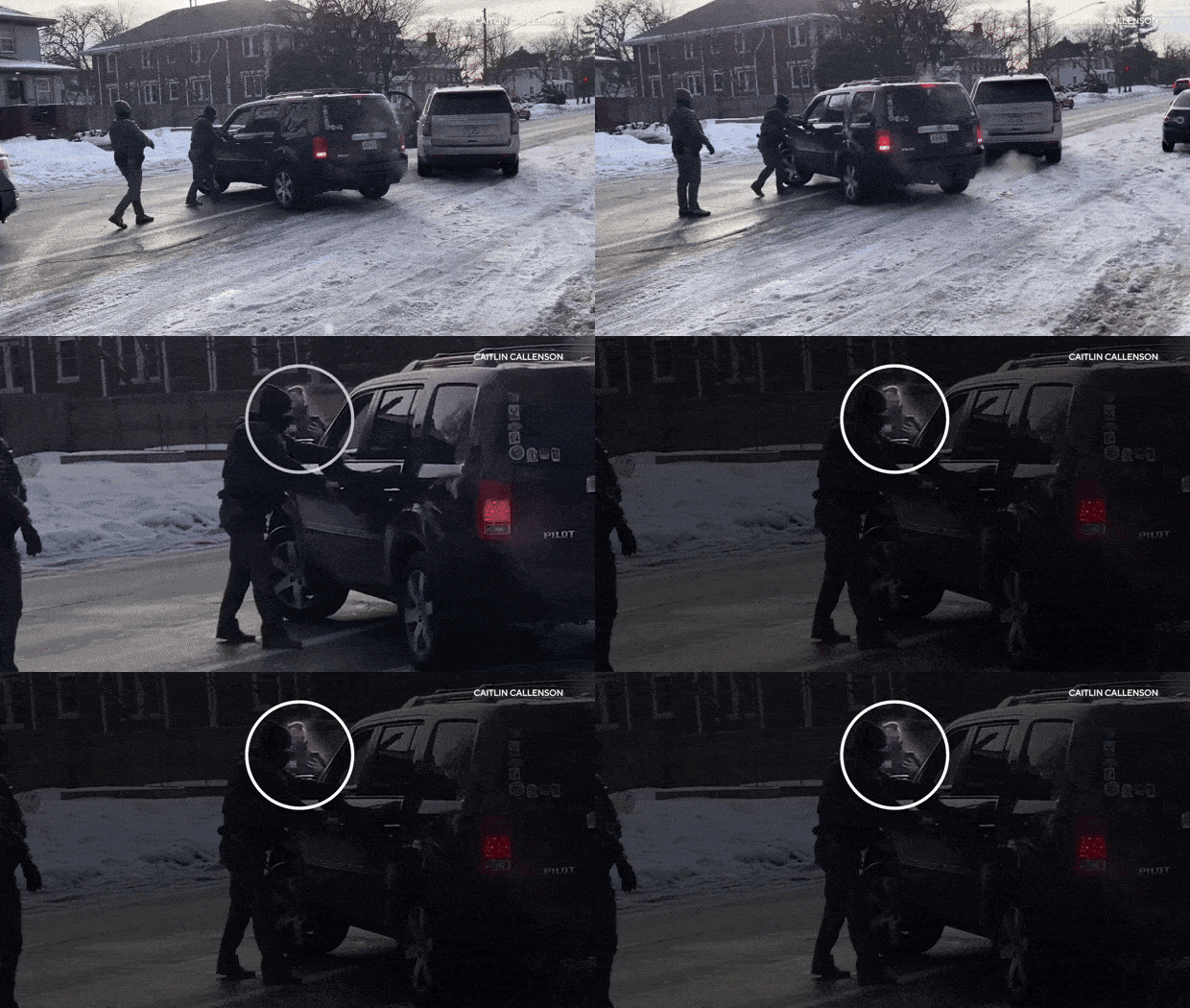

|
Sophos2 Well that's a lot of text that invites quite a bit of dialogue. My response addressing each conversation starter doesn't fit in a single text box. I have no idea what each text box's character count is, but this is part 1: Yes, DHS (administrative) policy does direct that officers SHOULD AVOID (not MUST AVOID and not SHALL NOT AVOID) placing themselves directly in front of or behind a vehicle, or in positions where they have no alternative but to use deadly force. Officers are trained to not INTENTIONALLY block or approach vehicles from the front. Officers could be sanctioned administratively or cited in performance evaluations for corrective actions to perform safely, depending on the officer's justification for making the decision. Documenting the incident with a camera could mitigate the need for administrative action if his justification is to document facts/evidence for subsequent scrutiny. What we see in the video is Renee Good parked her vehicle perpendicular to the road after previously dropping off her wife who began recording the incident from outside the vehicle and with protesters/instigators standing on the sidewalk behind the vehicle. The officer safely crosses in front of the vehicle while recording. Renee Good makes statements that could minimize the threat. A reasonable officer has to wonder if she's being truthful or coercing him to do it again for other reasons. The wife begins harassing and taunting him. He politely continues and chooses to cross in front again as fellow officers on the opposite side of the vehicle are giving verbal directives indicating Renee Good is not free to leave. A reasonable officer should recognize that circumstances have changed and human behavior can also change quickly. Does he stand with the harassing, taunting wife, or does he cross to the other side to join his fellow officers and get out of any line of fire if the situation escalates to that. He chooses to continue filming as he crosses again. Under the circumstances, that doesn't seem like a sanctionable offense to me. The tactical objective of joining and filming fellow officers is best accomplished by the risky shortest distance. If he reverses course and attempts to join fellow officers around the rear of the vehicle, it's a longer walk, with less visual contact with fellow officers and, he has to walk past the taunting wife and the protesters. He chooses to continue with the still risky shortest distance across an icy pavement (perhaps assessing the driver previously let him pass without any sign of aggression at the time). This just means if they can reasonably step out of harm's way rather than shoot, they SHOULD (not MUST) do so. The question that comes to my mind is at what point did the vehicle represent an imminent threat? She previously just moved forward and back during a previous contact earlier in the day according to ICE agents that were present. During the incident where she lost her life she remained parked perpendicular in the street, blocking a lane and honking her horn repeatedly. In my opinion a reasonable officer would recognize an imminent threat the moment the fellow officers direct the driver to exit the vehicle as the wife attempts to enter the passenger side of the vehicle. Prior to that, the officers knew the 2 ladies were together and traveled in the same vehicle. The driver was initially passive but all people have the ability to escalate under stress. The driver reverses her vehicle and turns, which positions him in front of the vehicle. The driver initiated this moment of dangerous positioning: His POV video shows that he continued to move across the icy road, away from the front of the vehicle. He doesn't break into a sprint, and I'm not sure I would either if I was a 200+ pound guy weighed down by the additional weight of his equipment on the icy road. Unlike what we see in Hollywood portrayals, it's tactically unwise to leave your feet and dive out of the way. She doesn't let him complete his movement.
Spork : Continue
Sophos2Part 2:
Prohibition on Shooting at Vehicles: Discharging a firearm at a moving vehicle or its operator is generally prohibited unless the officer has a reasonable belief that the subject poses an imminent threat of death or serious injury.
Disabling Vehicles: Officers are strictly prohibited from firing at a vehicle solely to disable it or to prevent a suspect from fleeing.
Public Safety Considerations: Before using force against a vehicle, LEOs must consider the hazards posed to innocent bystanders, as a vehicle with a disabled driver can become an unguided "missile".
We see things escalate again in this scene:
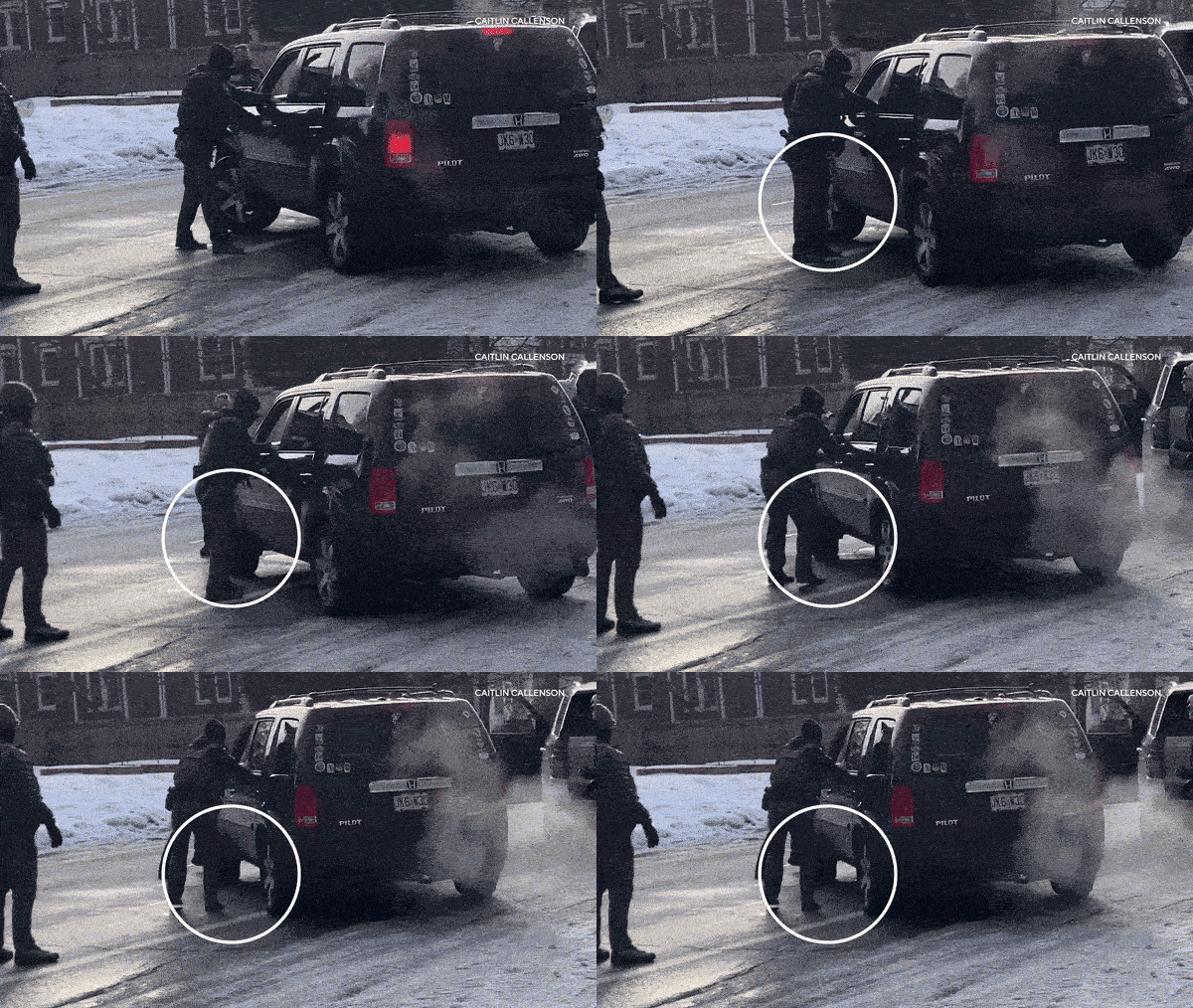
Watch the front tire slip while still facing the direction of the officer (the moment of acceleration) as the 4,000 pound vehicle rocks back - reflecting the suddenness of the driver's decision. If you've been in a situation like that in a parking lot or when friends are horsing around with you, you know how little reaction time you have. Hollywood movies can depict it done safely when the script calls for it, but in real life, in real time, on an icy street, and you're an officer trained to stop the threat, the reaction may not look like what a Hollywood hero does.
|
|
Sophos2 Part 2: We see things escalate again in this scene: Watch the front tire slip while still facing the direction of the officer (the moment of acceleration) as the 4,000 pound vehicle rocks back - reflecting the suddenness of the driver's decision. If you've been in a situation like that in a parking lot or when friends are horsing around with you, you know how little reaction time you have. Hollywood movies can depict it done safely when the script calls for it, but in real life, in real time, on an icy street, and you're an officer trained to stop the threat, the reaction may not look like what a Hollywood hero does. I used the phrase "stop the threat", not stop the vehicle. When you're having interactions with a person and they show a willingness to attack you with a weapon, you don't shoot at the weapon, you attempt to stop the person that uses the weapon. So you're not shooting at the vehicle. You're stopping the person attempting to control the vehicle. That policy is in place to remind officers that a bullet is not likely to stop a vehicle. No one trains to shoot at vehicles. All firearms qualifications are done with silhouettes that are not vehicles. Only Hollywood script writers depict officers shooting at vehicles. But the policy does identify circumstances when a driver may be targeted, "when the officer has a reasonable belief that the subject poses an imminent threat of death or serious injury." In this case, impact was so imminent, it appears to have happened as the tires subsequently gripped and around the time when the driver began to turn her steering wheel. In the officer's moment of reaction time, his justification based on training would be an attempt to stop the driver. The officer's POV doesn't reflect where he's looking, it's obviously where the camera is pointed. But officers are trained to be aware of fellow officers. He may have tunnel vision under stress, but if he's an experienced officer he may have peripheral vision to see a fellow officer still attached (voluntarily or involuntarily) to the vehicle door. We know he had experience in the safety risks of a dragging incident. Has the threat stopped after the first shot? No. He then initiates a "double tap". Unfortunately, between the second and third shots of his double tap, the fellow officer becomes unattached, indicating the driver and her vehicle are no longer a threat to the life of the officer and his fellow officer. It's a fair question as to whether or not a prosecutor may attempt to litigate a double tap decision following a more justified single shot decision. There is no reason to believe the officer's decision to shoot was to disable a vehicle or prevent a suspect from fleeing. People can speculate, but no officer is ever trained to attempt such a foolhardy thing. They are trained to stop people with their firearms (if lethal force is justified), not vehicles. An ambitious prosecutor can allege an attempt, but would be doing so without compelling evidence. The only bullet hole in the vehicle was the first shot through the windshield, toward the driver.
Spork : Keep going.
SophosPart 3:
The case of Kirby vs Duva from 2008 sets precedent that an officer can not use self defense as a justification for lethal force if they unreasonably place themselves in harm's way.
What you posted is not accurate. The case did not introduce a new "self-defense can't justify lethal force" rule, but it reinforced that an officer's own reckless conduct is part of the constitutional reasonableness analysis. It also did not establish a binding precedent for the circumstances of the death of Renee Good because 6th Circuit Court cases are not binding in Minnesota, and most importantly…the case was a CIVIL matter between a plaintiff and a defendant, NOT a criminal case.
ICE does not have the legal authority to make a traffic stop
That's not correct. ICE does not conduct traffic enforcement, but ICE agents may stop vehicles incident to immigration enforcement or obstruction. DHS policy does not expressly ban ICE officers from ever conducting traffic stops. The reason the vehicle was stopped was due to the driver's decision to stop and by all accounts - to disrupt the functioning of ICE officers. She caused ICE agents to become involved. But that's irrelevant. She was likely going to be arrested for interfering, not for improper parallel parking. It was not a traffic stop.
Sophos Part 3: What you posted is not accurate. The case did not introduce a new "self-defense can't justify lethal force" rule, but it reinforced that an officer's own reckless conduct is part of the constitutional reasonableness analysis. It also did not establish a binding precedent for the circumstances of the death of Renee Good because 6th Circuit Court cases are not binding in Minnesota, and most importantly…the case was a CIVIL matter between a plaintiff and a defendant, NOT a criminal case. The case was about an officer who wrongly shot a fleeing suspect. The appellate court found that the fleeing suspect DID NOT hit the officer, and the suspect's vehicle was "moving slowly and in a non-aggressive manner, could not have hit any of the officers, and was stationary at the time of the shooting. Consequently, reasonable police officers in defendants' positions would not have believed that Kirby "pose[d] a threat of serious physical harm, either to the officer[s] or to others." law.justia.com/cases /federal/appellate-c ourts/ca6/06-1976/08 a0232p-06-2011- It doesn't apply in any possible prosecution of the officer who used lethal force in this case. That's not correct. ICE does not conduct traffic enforcement, but ICE agents may stop vehicles incident to immigration enforcement or obstruction. DHS policy does not expressly ban ICE officers from ever conducting traffic stops. The reason the vehicle was stopped was due to the driver's decision to stop and by all accounts - to disrupt the functioning of ICE officers. She caused ICE agents to become involved. But that's irrelevant. She was likely going to be arrested for interfering, not for improper parallel parking. It was not a traffic stop. As to your final remarks, I agree with you that officers should not say "Get the **** out of the car" as one officer did, or "******* *****" after some ******* ****accelerates toward him, and hits him as he shoots to stop the threat. But I understand the sentiment from a fellow human. I might have said the same thing under those circumstances. I've said it when people almost hit me with their vehicles under different circumstances when I was somewhat protected by my own vehicle. I can see a reasonable but similarly ill-mannered person saying the same thing. I agree that we should not use that language. But it's irrelevant because post incident demeanor does not determine whether or not deadly force was justified. I have no idea what injuries he may have sustained when impacted by her vehicle. I also saw the tough guy not limping. Was he pushing through it and pretending not to be hurt? Did the adrenaline temporarily mask injury? Could it be true that he was not visibly injured, but was taken to a hospital after being hit by a vehicle and examined, according to policy or general "best practices"? I think it's irrelevant to the shoot - don't shoot issue at hand. You don't justify action based on actual injuries known after the fact.
Spork : I applaud the research but I'm sure a good defense attorney can show the opposite. Especially in civil court which is where this will head eventually
 Joe : AARRgf tipped Spork 500 credits for a post in this forum discussion.
On a routine basis, did you see officers and agents tasked with enforcing immigration law wearing mask and using the tactics we're seeing now, under previous Administrations? The answer would be no. People are upset because they see the federal government using the type of heavy handed enforcement, most notably in blue states and cities, that they would see on the network news in other countries.
rocket : Why do you think these ICE agents are suddenly wearing masks?
|
|
Sophos2 Well that's a lot of text that invites quite a bit of dialogue. My response addressing each conversation starter doesn't fit in a single text box. I have no idea what each text box's character count is, but this is part 1: Yes, DHS (administrative) policy does direct that officers SHOULD AVOID (not MUST AVOID and not SHALL NOT AVOID) placing themselves directly in front of or behind a vehicle, or in positions where they have no alternative but to use deadly force. Officers are trained to not INTENTIONALLY block or approach vehicles from the front. Officers could be sanctioned administratively or cited in performance evaluations for corrective actions to perform safely, depending on the officer's justification for making the decision. Documenting the incident with a camera could mitigate the need for administrative action if his justification is to document facts/evidence for subsequent scrutiny. What we see in the video is Renee Good parked her vehicle perpendicular to the road after previously dropping off her wife who began recording the incident from outside the vehicle and with protesters/instigators standing on the sidewalk behind the vehicle. The officer safely crosses in front of the vehicle while recording. Renee Good makes statements that could minimize the threat. A reasonable officer has to wonder if she's being truthful or coercing him to do it again for other reasons. The wife begins harassing and taunting him. He politely continues and chooses to cross in front again as fellow officers on the opposite side of the vehicle are giving verbal directives indicating Renee Good is not free to leave. A reasonable officer should recognize that circumstances have changed and human behavior can also change quickly. Does he stand with the harassing, taunting wife, or does he cross to the other side to join his fellow officers and get out of any line of fire if the situation escalates to that. He chooses to continue filming as he crosses again. Under the circumstances, that doesn't seem like a sanctionable offense to me. The tactical objective of joining and filming fellow officers is best accomplished by the risky shortest distance. If he reverses course and attempts to join fellow officers around the rear of the vehicle, it's a longer walk, with less visual contact with fellow officers and, he has to walk past the taunting wife and the protesters. He chooses to continue with the still risky shortest distance across an icy pavement (perhaps assessing the driver previously let him pass without any sign of aggression at the time). This just means if they can reasonably step out of harm's way rather than shoot, they SHOULD (not MUST) do so. The question that comes to my mind is at what point did the vehicle represent an imminent threat? She previously just moved forward and back during a previous contact earlier in the day according to ICE agents that were present. During the incident where she lost her life she remained parked perpendicular in the street, blocking a lane and honking her horn repeatedly. In my opinion a reasonable officer would recognize an imminent threat the moment the fellow officers direct the driver to exit the vehicle as the wife attempts to enter the passenger side of the vehicle. Prior to that, the officers knew the 2 ladies were together and traveled in the same vehicle. The driver was initially passive but all people have the ability to escalate under stress. The driver reverses her vehicle and turns, which positions him in front of the vehicle. The driver initiated this moment of dangerous positioning: His POV video shows that he continued to move across the icy road, away from the front of the vehicle. He doesn't break into a sprint, and I'm not sure I would either if I was a 200+ pound guy weighed down by the additional weight of his equipment on the icy road. Unlike what we see in Hollywood portrayals, it's tactically unwise to leave your feet and dive out of the way. She doesn't let him complete his movement.
Spork : Response part1
Fair enough, you do like to talk about what Hollywood portays. That's interesting to me. Anyhow viewed through a prosecutor's lens, this narrative attempts to excuse conduct that directly contradicts the very policy it cites. DHS policy does not merely offer casual guidance; it exists precisely to prevent officers from manufacturing deadly-force encounters, and here the officer knowingly and repeatedly placed himself in front of a vehicle despite clear alternatives (In multiple incidents). The argument that "should avoid" is somehow permissive ignores that intentional exposure to a known hazard, after already crossing safely once this incident as (well as the last), constitutes unreasonable risk creation, especially when the officer was not compelled by urgency, obstruction, or loss of tactical control. Saying filming this justified this decision collapses under scrutiny: evidence collection does not require standing in the kill zone, nor does it outweigh the duty to de-escalate and reposition safely. Moreover, the officer was fully aware the vehicle was occupied, emotionally charged, and surrounded by a volatile crowd-conditions that heighten, not diminish, the obligation to disengage from the vehicle's path. The suggestion that the driver "initiated" the danger by repositioning the car ignores the officer's own agency in choosing to re-enter that danger zone rather than taking a longer but safer route, which policy explicitly contemplates. Finally, the assertion that icy conditions excused the officer's inability to move rings hollow: if footing was so compromised that evasive movement was unlikely, that reality made his choice to cross in front of the vehicle even more reckless, not less. In short, this was not an unavoidable split-second crisis imposed on the officer; it was a foreseeable, preventable situation created by his own decisions, culminating in the very outcome DHS policy exists to prevent.
Spork : I applaud the research but I'm sure a good defense attorney can show the opposite. Especially in civil court which is where this will head eventually
olemiss1968 : I agree. It certainly will.
 FASTLANE:
This "Fastlane" discussion may cover sensitive, inflammatory, or controversial topics.
See Fastlane guidelines »
Views: 6,817
# Replies: 234